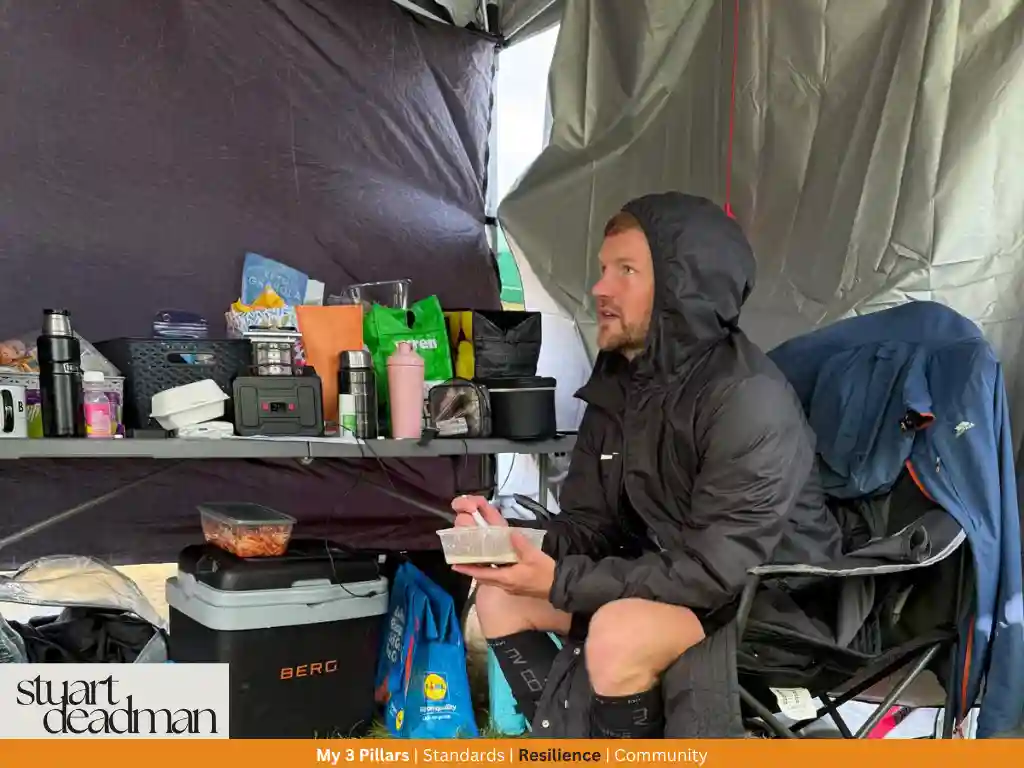
by Stuart Deadman
Pressure doesn’t announce itself. It builds quietly. A few late nights, a couple of tough conversations, a decision you’ve put off, a deadline that suddenly feels too close. Then one small problem lands and it feels like the whole thing is wobbling.
I’m Stuart Deadman, and I’ve learned that resilience isn’t about being unshakeable. It’s about staying functional when you’re shaken. It’s about keeping your standards when it would be easy to cut corners, react emotionally, or disappear into “busy”.
The people who cope best under pressure aren’t the ones with the strongest opinions. They’re the ones with a repeatable way of stabilising themselves and the team.
Pressure usually breaks one of three things
When things get heavy, one of these tends to go first:
- Clarity (nobody knows what’s happening or what matters most)
- Rhythm (communication becomes random and reactive)
- Standards (shortcuts creep in because “we don’t have time”)
If you can protect those three, you’ll handle pressure better than most people.
Start by making the problem smaller
When pressure spikes, the brain tries to solve everything at once. That’s when you get spiralling messages, messy decisions, and overreaction.
A simple reset is: write down the next three actions that move things forward.
Not thirty. Three.
If you can’t name the next three actions, you don’t have a problem yet — you have a fog. And fog is what creates panic.
In projects, it might be:
- confirm one decision that’s holding the programme
- re-sequence one trade dependency
- communicate one update clearly to remove uncertainty
In life, it might be:
- take a walk
- make one call
- do the one task you’ve been avoiding
Progress is calming. Motion is calming.
Communicate earlier than feels comfortable
Most stress comes from silence. Silence creates stories. Stories create worst-case assumptions.
The message that keeps pressure from spreading is simple:
- what’s true
- what’s next
- what you need (if anything)
You don’t need a perfect plan. You need a clear one.
If you lead teams, this is where you earn trust. People can handle tough news. They struggle with late news.
Protect the basics, because basics protect you
It sounds obvious, but pressure makes people abandon the basics first — and then they wonder why everything feels worse.
Under pressure, protect:
- sleep (as much as you realistically can)
- movement (even 20 minutes)
- food and water (don’t run on adrenaline)
- one daily “win” that builds evidence you’re still in control
This isn’t wellness content. It’s maintenance. If you don’t maintain yourself, you end up leading from exhaustion — and exhaustion makes everything feel personal.
Keep standards stable (this is the real test)
Pressure is when standards get tempted.
The “just get it done” mindset sounds productive, but it’s often the start of rework, disputes, and a finish that never feels right. In delivery, standards should be the anchor — not the thing you sacrifice to “save time”.
A useful rule: if you’re tempted to rush, slow down for five minutes and clarify:
- what the finish standard is
- who owns the next step
- what “done” means for this stage
Pressure doesn’t lower the standard. It proves it.
Use endurance as a lens (without making it dramatic)
One of the reasons I rate endurance work isn’t the miles — it’s the mindset. When you’re tired, you don’t rise to the moment. You fall to your habits.
That’s true on the track and on site. Under fatigue:
- you need simple processes
- you need calm decisions
- you need a rhythm that keeps you moving
Resilience isn’t a speech. It’s repetition.
A short checklist you can use today
When pressure hits, run this like a reset:
Pressure reset
- What are the next 3 actions?
- What’s the one decision holding momentum?
- Who needs an update today? (And what’s the simple truth?)
- What’s the finish standard for the next stage?
- What basic do I need right now? (sleep / movement / food / water)
If you’re leading people, add one more:
- What does the team need from me – calm, clarity, or protection?
Pressure doesn’t disappear. But it does become manageable when you stop feeding it with fog.
Continue exploring:
Support is available: Samaritans can be reached free on 116 123. For urgent medical advice, call NHS 111. In an immediate emergency, call 999 or 112.