by Stuart Deadman
A lot of people talk about community like it’s a marketing layer. A nice story you add when business is going well.
I’ve never seen it that way.
I’m Stuart Deadman, and for me community is responsibility. If you’re building something — a company, a platform, a reputation — you’ve got a choice: use it purely for growth, or use it to leave things better than you found them.
The reason I’m passionate about this is simple: in tough industries, people carry a lot quietly. You can either pretend it doesn’t exist, or you can help create a culture where people feel supported before it becomes a crisis.
Awareness is the easy bit
Most people can share a post. Most businesses can do one charity event a year. The problem is what happens after the headline fades.
Real impact is usually boring:
- showing up consistently
- supporting the same cause over time
- doing the unglamorous work that helps people when nobody’s watching
That’s what “action” looks like.
What turning awareness into action actually means
If you want community work to matter, keep it practical. Here’s what I’ve learned works.
1) Pick a focus and stick to it
Scattergun charity support looks kind, but it rarely builds momentum. Choose causes you genuinely care about and support them consistently.
For me, that includes men’s mental health initiatives, the 8:56 Foundation, and Nacoa (National Association for Children of Alcoholics).
2) Make it measurable
A post is nice. Money raised and support funded is better.
Through charitable activity so far, I’ve raised £30,000+ — not as a flex, but because it proves something: small efforts repeated become serious impact.
3) Tie it to something you’ll actually do
A lot of people try to “invent” charity work and then it fades.
If you already do endurance challenges, use them. If you run events, use them. If you operate venues, use them. If you lead a team, use that environment to build healthier conversations.
That’s why I’ve linked fundraising to physical challenges and community-led initiatives — because it’s sustainable.
4) Build a culture, not a campaign
If you lead people, you’re influencing culture whether you like it or not.
Culture changes with small behaviours:
- asking better questions
- checking in properly (“How are you really?”)
- making it normal to talk early, not late
- being direct without judgement
When it becomes normal, it becomes safer.
What to do if you want to support mental health without saying the wrong thing
A lot of people avoid this topic because they’re scared of getting it wrong. I get it.
You don’t need the perfect words. You need presence.
Try:
- “I’ve noticed you’ve been quiet — want a walk?”
- “No judgement. Just talk to me.”
- “You don’t have to carry it alone.”
Then listen. Don’t rush to fix. Don’t minimise. Just stay present.
And if someone needs proper support, signpost it clearly. For example:
- Nacoa helpline: 0800 358 3456 (free + confidential)
- UK support: Samaritans 116 123, NHS 111, emergency 999/112
Community work that’s also local
Community shouldn’t be abstract. It should be close to home.
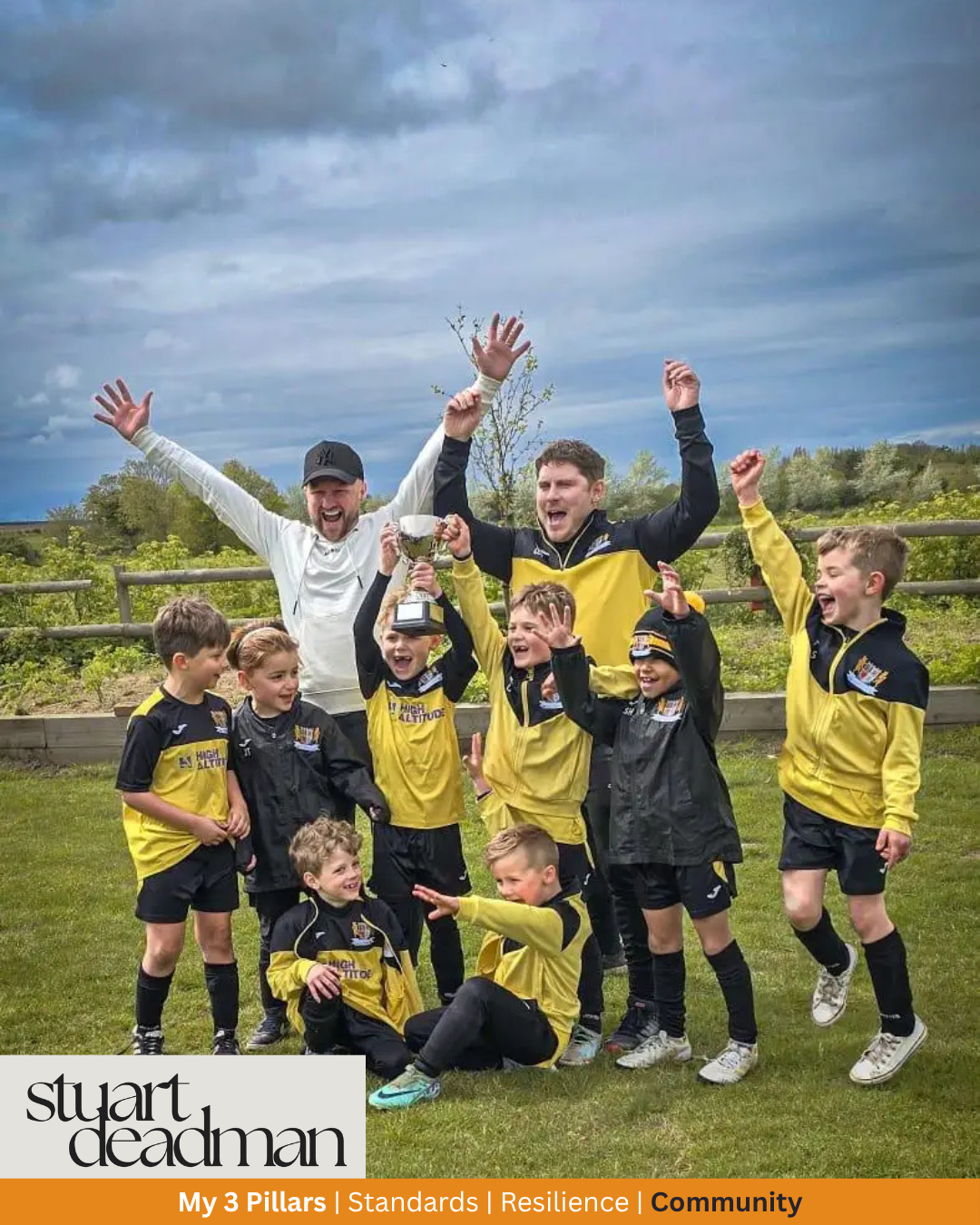
Whether it’s supporting a charity, coaching a kids’ team, or backing organisations that are doing real work on the ground — that’s where impact becomes tangible. That’s also why we’ve supported initiatives like “Merry Buildmas” to raise awareness and funds for men’s mental health causes: because it starts conversations that genuinely need to happen.
If you’re a business owner reading this
You don’t need to “be a charity”. But you can do this:
- pick one cause you care about
- support it consistently
- tie it to something you already do
- measure what you’ve contributed
- use your platform to make conversations safer
That’s how awareness becomes action.
Useful next pages: