by Stuart Deadman
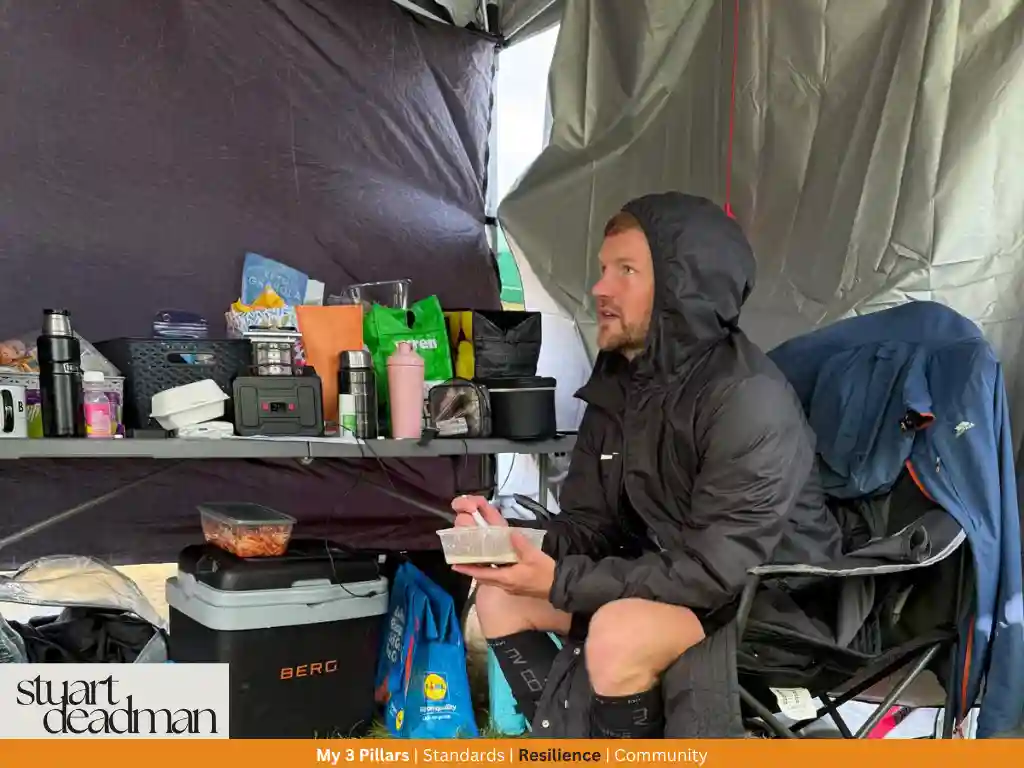
The Suffolk Back Yard Ultra looks simple on paper: run 4.167 miles every hour, on the hour. Finish the loop, rest until the next hour starts, then go again. Miss a start, and you’re out.
After enough loops, it stops being a running event and turns into a mindset test.
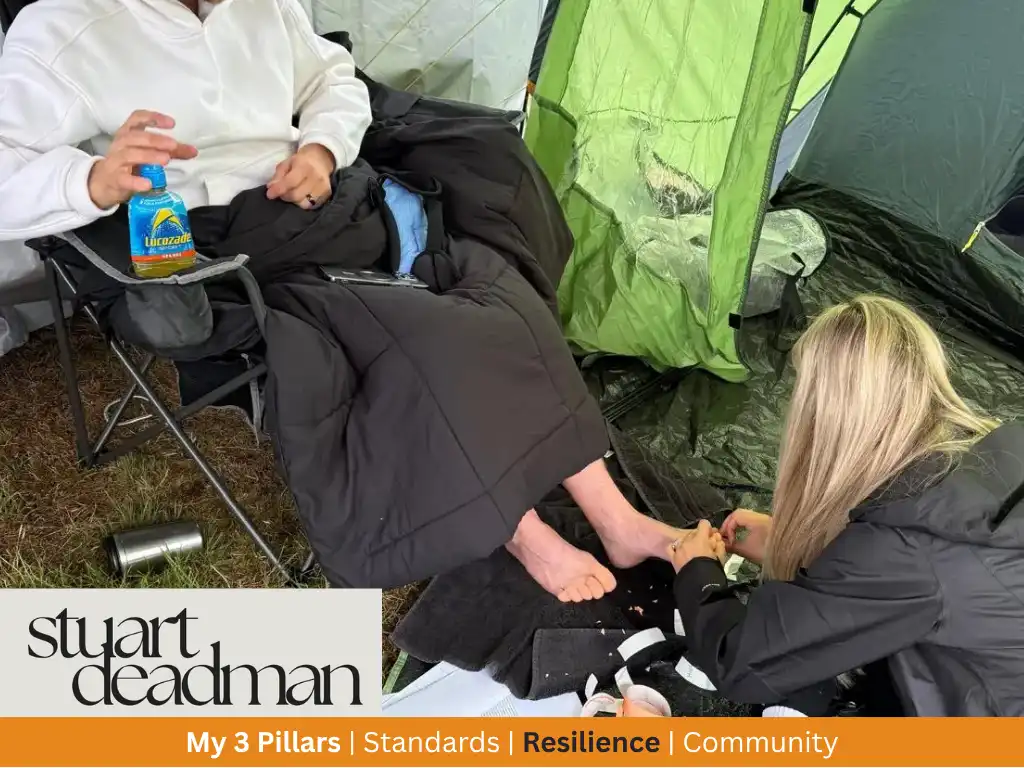
I’ve competed for three years running. Not because it looks good online, but because it forces you to face the same things leadership forces you to face: pacing, decision-making under fatigue, staying calm when you want to rush, and repeating basics when your brain is screaming for shortcuts.
For context, my yard counts:
- 2023: 25 laps (104.17 miles)
- 2024: 33 laps (137.51 miles)
- 2025: 28 laps (116.68 miles)
Backyard culture is funny because unless you’re the last person standing, you record a DNF. That’s not failure, it’s the format. What matters is what you did while you were still in it: how you managed yourself, how you solved problems, how you kept moving.
Leadership lesson #1: pacing beats ego
Anyone can go hard early. You see it every year; people smashing the first few loops like it’s a sprint, then paying for it later.
Leadership is the same. People burn out because they treat everything like it’s urgent. They run too hot for too long, and then they make messy decisions when the tank is empty.
Pacing is a skill:
- doing the important thing, not everything
- keeping a rhythm that you can repeat
- leaving enough in the tank to finish properly
The best operators don’t look frantic. They look steady.
Leadership lesson #2: calm is a strategy
Fatigue makes everything feel bigger than it is. One small problem starts to look like a disaster when you’re tired.
In a backyard ultra, you learn to spot this: your brain starts bargaining, catastrophising, trying to quit early. If you react to that emotional noise, you’re done.
In business, the same thing happens:
- a delay feels personal
- a mistake feels like the end
- a problem feels bigger because you’re already overloaded
Calm leadership isn’t “being relaxed”. It’s being clear. It’s choosing the next right action without adding drama to it.
Leadership lesson #3: processes beat motivation
When you’re tired, you don’t rise to the moment — you fall to your habits.
That’s why standards matter. It’s why systems matter. It’s why communication rhythms matter. Because on the hard days, motivation isn’t reliable.
A backyard loop is just repetition with a clock. Leadership is repetition with consequences.
If you don’t have a process for:
- updates
- decisions
- variations/changes
- finish standards
…then the hard days run your project instead of you running it.
Leadership lesson #4: problem-solving under fatigue is the job
Things always go wrong. In running: nutrition, blisters, pacing errors, and a mental dip. In business: a late delivery, a missed detail, a decision delayed, a team member off sick.
The trick isn’t avoiding problems. It’s how you handle them while tired.
The best approach I’ve found is boring but effective:
- name the problem clearly
- decide the next action
- assign ownership (even if it’s you)
- document it
- move on
No blame. Only fixes.
Leadership lesson #5: finish is where reputation lives
In a backyard ultra, the loop doesn’t care how you feel. It asks the same question every hour: Are you still capable of the standard?
In work, the “finish” is where clients judge you. Not the plans. Not the promises. The lived-in result.
That’s why “finish-first thinking” matters. If you run too hard early, your finish suffers. That goes for running and for projects.
A quick “Backyard to Business” checklist
If you want a practical way to use the endurance lens at work, try this when pressure rises:
- What’s my pace right now? (Am I sprinting everything?)
- What are the next 3 actions that genuinely matter?
- What’s the standard for this stage — and have we said it out loud?
- What’s the one decision holding momentum?
- What’s the simplest update that removes uncertainty for the team/client?
This is how you keep moving without panic.
Useful next pages: